Video feedback rhizome notes:
1. Open feedback loop with video projector and camera. Apply some process of servo randomization (or perhaps just constant motion) to zoom, aperture, and focus on camera lens.
2. Project multiple films onto projector surface to introduce asynchronous inputs.
3. Where possible, capture stills from sources and convert to audio in upic… see what the un-synched pairing produces.
Wednesday, February 11, 2009

“engines” for generative art
this is an on-going series of potential catalytic forces/machines for auto-producing works of art:
non-man-made: organic/physical
1. -gravity
2. -oxidization
3. -electrolysis
4. -alkalization – (i.e. the neuro-chemical effect of any drug (that occurs in nature) ending in “–ine”)
5. -sympathetic vibration
6. -erosion
7. -wind/sun
8. -predictable animal behaviors (circadian rhythms, reproductive behaviors, time or light-based noise-emitting, etc.)
9. -heat/fire
10. -light (bleaching) vs. lack of light
11. -magnetism
12. -photosynthesis
13. -weight distribution of non-dense substances (i.e. air and helium, oil and water)
14. -wave interference/wave harmonization
15. -convection
16. -infection
17. -freezing
18. -crystallization
19. -nuclear fusion/fission (by stars)
20. -singularity
man-made: mechanical/electrical/electronic/human
1. -numbering systems (i.e. random number generators, Fibonacci series, fractals) and computer software designed to employ these numbering systems.
2. -memory
3. -crowd-behaviors
4. -sleep
5. -breathing
6. -reproduction-related behavior
7. -low-friction perpetual motion devices
8. -feedback (audio or video)
9. -Différance/syntagmatic context
10. -A-synchronicity of machines
11. -alkalization – (i.e. the neuro-chemical effect of any (man-made) drug ending in “–ine”)
12. -serotonin reuptake inhibition
13. -hypnosis
14. -vitrification
15. -nuclear fusion/fission (by people)
16. -infrasound
non-man-made: organic/physical
1. -gravity
2. -oxidization
3. -electrolysis
4. -alkalization – (i.e. the neuro-chemical effect of any drug (that occurs in nature) ending in “–ine”)
5. -sympathetic vibration
6. -erosion
7. -wind/sun
8. -predictable animal behaviors (circadian rhythms, reproductive behaviors, time or light-based noise-emitting, etc.)
9. -heat/fire
10. -light (bleaching) vs. lack of light
11. -magnetism
12. -photosynthesis
13. -weight distribution of non-dense substances (i.e. air and helium, oil and water)
14. -wave interference/wave harmonization
15. -convection
16. -infection
17. -freezing
18. -crystallization
19. -nuclear fusion/fission (by stars)
20. -singularity
man-made: mechanical/electrical/electronic/human
1. -numbering systems (i.e. random number generators, Fibonacci series, fractals) and computer software designed to employ these numbering systems.
2. -memory
3. -crowd-behaviors
4. -sleep
5. -breathing
6. -reproduction-related behavior
7. -low-friction perpetual motion devices
8. -feedback (audio or video)
9. -Différance/syntagmatic context
10. -A-synchronicity of machines
11. -alkalization – (i.e. the neuro-chemical effect of any (man-made) drug ending in “–ine”)
12. -serotonin reuptake inhibition
13. -hypnosis
14. -vitrification
15. -nuclear fusion/fission (by people)
16. -infrasound
Monday, February 9, 2009
फेस ओने: पोस्ट माडर्न प्सोत स्च्मोस्त स्च्मोदेर्ण
observations about Jean-François Lyotard’s criteria for works of art to be postmodern.
Representation/Reproduction/Legitimation:
“I have broken the blue boundary of colour limits; come out into white, beside me comrade-pilots\, swim in this infinity, I have established the semaphor or suprematism. I have beaten the lining of the coloured sky, torn it away and in the sack which formed itself, I have put colours and knotted it. Swim the free white sea, infinity lies before you.” – Kasimir Malevich
“To appreciate a work of art, we need bring with us nothing from life.” – Clive Bell
Lyotard, in his approach to the crisis of representation, seems to imply that a “picture” and only a “picture” is a means of representation. An imitative picture is pre-modernist. An abstract image is modernist. A work of concept is postmodern. He denies the representative image the ability to extend into postmodernism.
To me, his error in thinking is the notion that conceptualism (non-representative non-visual art) escapes signification. Lyotard traps himself in Platonist “form” reasoning. If the mimetic image is an abomination, an impure copy of a form, then the abstract image is superior but still fails in its representation of “some thing”, then how does a concept, which survives only in second hand description, ephemeral experience/memory, speech or writing, photographic/graven image, or worse, the artist’s imagination escape also being a reproduction. Memories are reproductions. This doubt of the world of the senses betrays the invention of an imaginary “superior” world to which our access if blocked by the limitations of our senses. If this blocked access means access to “objective truth”, then all we have to engage experience is our memory as an imperfect copy of the imperfectly sensed experience.
What Lyotard appears to be searching for is the location of the sublime… the divine/external/metaphysical genius (in the ancient sense of the word genius) of a work of art. This might also be referred to as the “soul” of art. He is searching for a single idea that describes and unites the intention of all art and a definable, unchanging motivation for its creation. Consider the differences between art-brut and corporate art… what different motivations must they have? Does an “artiste-brut” consider his/her audience? Does a corporate artist have an uncontrollable compulsion to create?
The problems of representation and reproduction are bound up together. The act of mechanical reproduction is an extension of multiple processes within the mind that reproduce to represent. That a photograph or video is more capable of “accurately” reproducing a physical form (in some senses) than painting forces painting to change, to redefine what painting as a pursuit seeks. It continues, even as an abstraction, to seek something. When design becomes an easy-to-use mechanical process or cinema provides movement that only painting and photography can imply, works of concept (performance, installation, self-mutilation, meditation, etc.) become the new vehicle for pursuing the “soul” of art, or the sublime. This is civilization still responding to the myth of the fall, asking itself “where did we go wrong?” and chasing its fleeting joy like Dante chasing Beatrice through heaven and hell.
The sublime is not an essence. The sublime is the joy of action, successful intuitive or sensitive problem solving. Its presence is arbitrary. It should not be viewed as a soul but as a pulse.
Lyotard’s postmodernism is as trapped within the language of the modernism he criticizes. His crisis of the ephemeral vs. the tangible in terms of corporate access to art is also misplaced. If corporations can buy flash mobs, generate imaginary money, and, most importantly INSPIRE a break from tangibility in art-making, then “ephemeral” art is BOUND TO corpoations अस well. Business becomes part of the blueprint for the search for the sublime.
And if we are we are to believe Baudrillard’s notion that Al-Quaeda produced the inimitable by the 9/11 attacks, then we must assume that they were not, in fact, imitating/responding to the years of corporate driven “secret warfare” that the United States through the CIA (and, in turn, the Mujahadeen) had been enacting on the third world. If we are to see the truth of this circumstance, corporatism is the model for “the inimitable” work of 9/11. The irony is that the potential for subsequent acts of domestic terrorism on this scale is what provided the Bush administration with the power to convince Americans that their “Uniquely American” civil liberties were purchasable with Bush’s own “political capital”. In this way, it is the Bush Administration who has ultimately succeeded in reproducing the un-reproducible in the consciousness of civilization. Bravo, Neo-conservatives! You have become the true postmodernists. You have captured the sublime by selling our own imagined fears back to us with imaginary money! So why do we not see this great slight of hand as the most successful act of both mimesis and nonrepresentationalism (i.e. the symbol of money is worth nothing more than our faith in it) in history? Why is this NOT considered a great act of art?
This brings us to the problem of legitimation. The Bush administration needed no legitimation as artists to engage in their work, though it is more skillfully theatrical than cinema, more trompe l’oeil than the ceiling Sant Ignazio, and more non-material than Chris Burden. The need for academics and museums and their power of display to legitimize art is rapidly being diminished by the culture of informational immediacy. The museum is replaced by deviant art, the cinema by television and again by youtube and hulu. Though men like George Soros and Thomas Friedman are locked in a bitter ideological struggle with men like Donald Rumsfeld and Dick Cheney, their ideologies are interdependent. Their money and the effects of their industry on people hold far more sway than their ideological debates over foreign aid, globalization, and the responsibility of the powerful to the powerless. The lack of need for politicians to legitimize their work as art is inversely mirrored by the absorption of punk rock into the corporate form of legitimate music. As music and film as commodities are given away for free in conjunction with ad-space on the Internet, legitimacy is established by proximity to advertising (youtube, myspace music, etc.). As these spaces become tandem with our living and working spaces and as music becomes less a component of ritual and more an element of environment (i.e. USE of music), its presence becomes imitative of cinema. As we are capable of “soundtracking” our lives, we begin moving our presence into a contextual, partially fictionalized narrative. As our lives cease to imitate art and actually become art, it is our own proximity to the tools of context creation that provide is with legitimacy.
Representation/Reproduction/Legitimation:
“I have broken the blue boundary of colour limits; come out into white, beside me comrade-pilots\, swim in this infinity, I have established the semaphor or suprematism. I have beaten the lining of the coloured sky, torn it away and in the sack which formed itself, I have put colours and knotted it. Swim the free white sea, infinity lies before you.” – Kasimir Malevich
“To appreciate a work of art, we need bring with us nothing from life.” – Clive Bell
Lyotard, in his approach to the crisis of representation, seems to imply that a “picture” and only a “picture” is a means of representation. An imitative picture is pre-modernist. An abstract image is modernist. A work of concept is postmodern. He denies the representative image the ability to extend into postmodernism.
To me, his error in thinking is the notion that conceptualism (non-representative non-visual art) escapes signification. Lyotard traps himself in Platonist “form” reasoning. If the mimetic image is an abomination, an impure copy of a form, then the abstract image is superior but still fails in its representation of “some thing”, then how does a concept, which survives only in second hand description, ephemeral experience/memory, speech or writing, photographic/graven image, or worse, the artist’s imagination escape also being a reproduction. Memories are reproductions. This doubt of the world of the senses betrays the invention of an imaginary “superior” world to which our access if blocked by the limitations of our senses. If this blocked access means access to “objective truth”, then all we have to engage experience is our memory as an imperfect copy of the imperfectly sensed experience.
What Lyotard appears to be searching for is the location of the sublime… the divine/external/metaphysical genius (in the ancient sense of the word genius) of a work of art. This might also be referred to as the “soul” of art. He is searching for a single idea that describes and unites the intention of all art and a definable, unchanging motivation for its creation. Consider the differences between art-brut and corporate art… what different motivations must they have? Does an “artiste-brut” consider his/her audience? Does a corporate artist have an uncontrollable compulsion to create?
The problems of representation and reproduction are bound up together. The act of mechanical reproduction is an extension of multiple processes within the mind that reproduce to represent. That a photograph or video is more capable of “accurately” reproducing a physical form (in some senses) than painting forces painting to change, to redefine what painting as a pursuit seeks. It continues, even as an abstraction, to seek something. When design becomes an easy-to-use mechanical process or cinema provides movement that only painting and photography can imply, works of concept (performance, installation, self-mutilation, meditation, etc.) become the new vehicle for pursuing the “soul” of art, or the sublime. This is civilization still responding to the myth of the fall, asking itself “where did we go wrong?” and chasing its fleeting joy like Dante chasing Beatrice through heaven and hell.
The sublime is not an essence. The sublime is the joy of action, successful intuitive or sensitive problem solving. Its presence is arbitrary. It should not be viewed as a soul but as a pulse.
Lyotard’s postmodernism is as trapped within the language of the modernism he criticizes. His crisis of the ephemeral vs. the tangible in terms of corporate access to art is also misplaced. If corporations can buy flash mobs, generate imaginary money, and, most importantly INSPIRE a break from tangibility in art-making, then “ephemeral” art is BOUND TO corpoations अस well. Business becomes part of the blueprint for the search for the sublime.
And if we are we are to believe Baudrillard’s notion that Al-Quaeda produced the inimitable by the 9/11 attacks, then we must assume that they were not, in fact, imitating/responding to the years of corporate driven “secret warfare” that the United States through the CIA (and, in turn, the Mujahadeen) had been enacting on the third world. If we are to see the truth of this circumstance, corporatism is the model for “the inimitable” work of 9/11. The irony is that the potential for subsequent acts of domestic terrorism on this scale is what provided the Bush administration with the power to convince Americans that their “Uniquely American” civil liberties were purchasable with Bush’s own “political capital”. In this way, it is the Bush Administration who has ultimately succeeded in reproducing the un-reproducible in the consciousness of civilization. Bravo, Neo-conservatives! You have become the true postmodernists. You have captured the sublime by selling our own imagined fears back to us with imaginary money! So why do we not see this great slight of hand as the most successful act of both mimesis and nonrepresentationalism (i.e. the symbol of money is worth nothing more than our faith in it) in history? Why is this NOT considered a great act of art?
This brings us to the problem of legitimation. The Bush administration needed no legitimation as artists to engage in their work, though it is more skillfully theatrical than cinema, more trompe l’oeil than the ceiling Sant Ignazio, and more non-material than Chris Burden. The need for academics and museums and their power of display to legitimize art is rapidly being diminished by the culture of informational immediacy. The museum is replaced by deviant art, the cinema by television and again by youtube and hulu. Though men like George Soros and Thomas Friedman are locked in a bitter ideological struggle with men like Donald Rumsfeld and Dick Cheney, their ideologies are interdependent. Their money and the effects of their industry on people hold far more sway than their ideological debates over foreign aid, globalization, and the responsibility of the powerful to the powerless. The lack of need for politicians to legitimize their work as art is inversely mirrored by the absorption of punk rock into the corporate form of legitimate music. As music and film as commodities are given away for free in conjunction with ad-space on the Internet, legitimacy is established by proximity to advertising (youtube, myspace music, etc.). As these spaces become tandem with our living and working spaces and as music becomes less a component of ritual and more an element of environment (i.e. USE of music), its presence becomes imitative of cinema. As we are capable of “soundtracking” our lives, we begin moving our presence into a contextual, partially fictionalized narrative. As our lives cease to imitate art and actually become art, it is our own proximity to the tools of context creation that provide is with legitimacy.
Tuesday, February 3, 2009
इ ऍम ऑफ़ थे इम्प्रेशन ठाट यू अरे नोट गोइंग तो कात्च में रिदीन' dirty
http://www.youtube.com/watch?v=xj7uaDtl0fg
Monday, January 19, 2009
a. writing and biology b. notes on a new clock
1. the inevitability of writing:
though we are unable to see it, does the fact the there is a physical synaptic record of our memories indicate that writing is an attempt to externalize our memory?
as marshall mcluhan postulates that technology is an extension of the body, does this mean that writing (or any means of record keeping) as an attempt to stabilize/externalize the "synaptic drawing" of memory. are records of information or visual representations of data the unconscious attempt of our species to share a nervous system among individuals?
how is this different from speech? how are our systems for expressing, retrieving, accumulating, and interpreting information like our nervous systems?
clearly, telephone networks, when viewed systematically, draw a picture very analogous to our nervous system.
what do the synaptic patterns that form memory look like? how do we interpret them?
2. more on new clocks:
a video clock is an interesting format, though its timecode is still rooted in the basis night/day/hour/minute second.
environmental intervals: this system of measurement is based on the movement of stellar bodies or the influence of regular atmospheric conditions on people (seasons). seasons are measured by weather fluctuations (atmospheric intervals) in relation to astronomical movements (stars, the sun, the moon, etc.)
when facing north, the sun dial uses the energy of the sun to measure a period of time that the sun is visible. how does our perception of time change when our process of measuring becomes less directly energy dependent on its major signifying influence (i.e. the sun?).
so how does our sense of global orientation relate to our sense of time? is temporal measurement inextricable from our understanding of space? is this ACTUALLY time or just an approximation, as time and space are regarded to be independent?
"obsolete" medieval temporal measurements for time of day:
the liturgy of hours (interesting in their non-specificity... how does this relate to temporal authority/power?):
Vespers (at the end of the day)
Compline (upon retiring)
Vigils (sometime during the night)
Matins (at sunrise)
Prime (during the first hour of daylight)
Terce (at the third hour)
Sext (at the sixth hour)
None (at the ninth hour)
Vespers (at the end of the day)
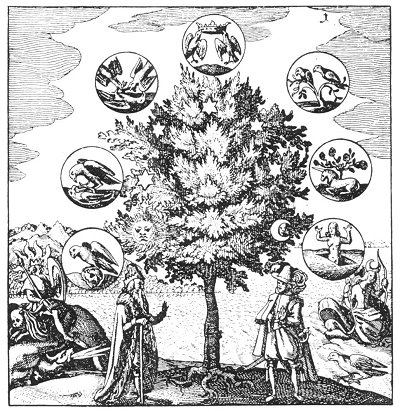
A. should a "new clock" discover its form based on obsolete or ancient ideas like the liturgy of hours or alchemy?
alchemy is an interesting point of relation because we have seen science pursue transmutation in the last century (mexican scientists turning tequila into diamonds, use of the cyclotron to create new elements). it is usually argued, though, that the alchemists were searching for a symbolic gold rather than actual gold... and that the "quicksilver" they refer to is not mercury but something else... but how does this relate to time? what paradigms within alchemy can relate to environmental intervals? what paradigms within alchemy demonstrates humans (or god) as independent from/having power over environment?
note - more research on alchemy is necessary.
B. in deference to the new 24 hour day, should a "new clock" be powered/measured by human processes and their intervals (i.e. the movement of currency or the movement of goods through the international supply chain, agriculture, economic fluctuations, war (or peace), number of births and deaths, etc.)
should a "new clock" attempt to entirely define itself by human produced intervals or merge human intervals with environmental intervals? is it even possible to extricate human intervals from environmental ones? do the environmental that we currently use to measure time respond to or change based on the unperceived human intervals that we impose upon them?
C. the use of the clock:
how is a clock used to promote hierarchies or authorities? how much of this authority assumes itself to be natural according to its relationship with clocks and time? are any of these hierarchies worth preserving?
what do clocks reveal to us about our habits? why are clocks used to gauge efficiency? how is the measurement of time incompatible with the actual movement of time? is थेप्रोसेस ऑफ़ मेअसुरिंग टाइम त्रुल्य देतेर्मिनिस्टिक?
how does an analog clock or a sundial differently reflect time than a digital clock?
a sundial and a digital clock reflect the energy used to power them. an analog clock appears to be a hybrid of these two... how does the reliance on analog clocks affect our understanding of time in a period between environmental measures of time and digital/electrical measures of time?
what are some alternative energy sources/mechanical models for clocks? (i.e. crystal sync, water, computers, etc.) and how do the effect the design of the machine?
an analog clock draws a picture that defines time based on what is visible in the world around us (namely the sun). a digital clock conceals this relationship, though it still nominally abides by the same interval. does the shift to using digital clocks indicate that we are less constrained by sunlight? how does the electric light play into this process?
4. what is the goal of redesigning a clock?
- to reflect our relationship with the natural world differently?
- to reflect that our movements and patterns have become or can become independent of the movements of energy outside of us? (or perhaps our perception of this)
- to observe our adherence to other intervals/energies/movements outside of the standard accepted ones?
- to reveal the relationship between time and hegemony?
- to consciously influence the design of our measurement of time?
5. other clock variations:
http://en.wikipedia.org/wiki/Prague_Astronomical_Clock
http://en.wikipedia.org/wiki/Clock_of_the_long_now
Thursday, January 15, 2009
twilight of the ladles (or tuned as with a meat grinder)
1. what do clocks mean? is there an aesthetic and/or practical way to reinvent measurements of time?
though this is still relatively conventional, the image is really fascinating (and also analog): http://www.youtube.com/watch?v=pHO1JTNPPOU
also, the word "chronophage" is awesome... anything bearing the suffix "-phage" is awesome. how about "mnemophage"?
how about making a video based calendar/clock that represents itself in the fashion of an analog clock that measures not only years/seasons/months/weeks/days/hours/minutes/seconds but compares the current epoch to history as a whole, showing how our weather, political climate, infant/adult mortality rates and causes are related... a means of every person viewing known historical data and being able to view the longitudinal character of civilization. perhaps it can incorporate mythological/alchemical imagery. perhaps it can include arbitrary elements. how does this demonstrate to us that there is an arbitrary or asynchronous relationship between our units of measure for time? what do they correspond to in the natural world? where do their name-meanings come from?
2. are drugs tools/technology? how are they tools? how are conventional tools dangerous in the way that drugs are? how are legally sanctioned chemicals (antidepressants/alcohol/nicotine/caffeine) or activities/products/behaviors that have addictive characteristics (video games, shopping, pornography) different from illegal ones? can one be dangerously addicted to things such as food, money, sex, exercise, competition, etc. and how is this different from being addicted to chemical "drugs"? what is a drug? how do law/crime/market forces relate to drugs and how does the illegality of one drug differ from the legitimized marketability of another?
http://www.erowid.org/
3. should i wear an eye patch for stealing/recycling someone else's art/music/concept?
http://insomnia.ac/essays/the_piracy_of_art/
4. let's take a field trip:
http://www.mjt.org/
5. paul laffoley:
http://www.miqel.com/visionary_art/analysis-laffoley-paul-black-white-hole.html
6. haunted ontologies:
http://k-punk.abstractdynamics.org/archives/008535.html
and here are some of mine: http://vids.myspace.com/index.cfm?fuseaction=vids.showvids&friendID=441418400&n=441418400&MyToken=36569a2c-7cf3-4228-a175-fd5dfb51d5b6
6. illusions:
http://listverse.com/miscellaneous/top-10-incredible-sound-illusions/
http://img65.imageshack.us/img65/7092/11brain2axx123157516705qp5.jpg
7. derrida:
structure, sign, and play: http://www.hydra.umn.edu/derrida/sign-play.html
naomi klein doc: http://video.google.com/videosearch?q=derrida%20documentary&sourceid=mozilla2&ie=UTF-8&oe=utf-8&um=1&sa=N&tab=wv#
8. handy math tool for musicians:
http://web.forret.com/tools/bpm_tempo.asp?bpm=100&beat=4&base=4
9. you thought you were being postmodern but really you were just being a jerk:
http://www.adbusters.org/magazine/79/hipster.html
10. neither generative nor postmodern but awfully pretty: http://www.raycaesar.com/
though this is still relatively conventional, the image is really fascinating (and also analog): http://www.youtube.com/watch?v=pHO1JTNPPOU
also, the word "chronophage" is awesome... anything bearing the suffix "-phage" is awesome. how about "mnemophage"?
how about making a video based calendar/clock that represents itself in the fashion of an analog clock that measures not only years/seasons/months/weeks/days/hours/minutes/seconds but compares the current epoch to history as a whole, showing how our weather, political climate, infant/adult mortality rates and causes are related... a means of every person viewing known historical data and being able to view the longitudinal character of civilization. perhaps it can incorporate mythological/alchemical imagery. perhaps it can include arbitrary elements. how does this demonstrate to us that there is an arbitrary or asynchronous relationship between our units of measure for time? what do they correspond to in the natural world? where do their name-meanings come from?
2. are drugs tools/technology? how are they tools? how are conventional tools dangerous in the way that drugs are? how are legally sanctioned chemicals (antidepressants/alcohol/nicotine/caffeine) or activities/products/behaviors that have addictive characteristics (video games, shopping, pornography) different from illegal ones? can one be dangerously addicted to things such as food, money, sex, exercise, competition, etc. and how is this different from being addicted to chemical "drugs"? what is a drug? how do law/crime/market forces relate to drugs and how does the illegality of one drug differ from the legitimized marketability of another?
http://www.erowid.org/
3. should i wear an eye patch for stealing/recycling someone else's art/music/concept?
http://insomnia.ac/essays/the_piracy_of_art/
4. let's take a field trip:
http://www.mjt.org/
5. paul laffoley:
http://www.miqel.com/visionary_art/analysis-laffoley-paul-black-white-hole.html
6. haunted ontologies:
http://k-punk.abstractdynamics.org/archives/008535.html
and here are some of mine: http://vids.myspace.com/index.cfm?fuseaction=vids.showvids&friendID=441418400&n=441418400&MyToken=36569a2c-7cf3-4228-a175-fd5dfb51d5b6
6. illusions:
http://listverse.com/miscellaneous/top-10-incredible-sound-illusions/
http://img65.imageshack.us/img65/7092/11brain2axx123157516705qp5.jpg
7. derrida:
structure, sign, and play: http://www.hydra.umn.edu/derrida/sign-play.html
naomi klein doc: http://video.google.com/videosearch?q=derrida%20documentary&sourceid=mozilla2&ie=UTF-8&oe=utf-8&um=1&sa=N&tab=wv#
8. handy math tool for musicians:
http://web.forret.com/tools/bpm_tempo.asp?bpm=100&beat=4&base=4
9. you thought you were being postmodern but really you were just being a jerk:
http://www.adbusters.org/magazine/79/hipster.html
10. neither generative nor postmodern but awfully pretty: http://www.raycaesar.com/
Subscribe to:
Comments (Atom)
