1. the inevitability of writing:
though we are unable to see it, does the fact the there is a physical synaptic record of our memories indicate that writing is an attempt to externalize our memory?
as marshall mcluhan postulates that technology is an extension of the body, does this mean that writing (or any means of record keeping) as an attempt to stabilize/externalize the "synaptic drawing" of memory. are records of information or visual representations of data the unconscious attempt of our species to share a nervous system among individuals?
how is this different from speech? how are our systems for expressing, retrieving, accumulating, and interpreting information like our nervous systems?
clearly, telephone networks, when viewed systematically, draw a picture very analogous to our nervous system.
what do the synaptic patterns that form memory look like? how do we interpret them?
2. more on new clocks:
a video clock is an interesting format, though its timecode is still rooted in the basis night/day/hour/minute second.
environmental intervals: this system of measurement is based on the movement of stellar bodies or the influence of regular atmospheric conditions on people (seasons). seasons are measured by weather fluctuations (atmospheric intervals) in relation to astronomical movements (stars, the sun, the moon, etc.)
when facing north, the sun dial uses the energy of the sun to measure a period of time that the sun is visible. how does our perception of time change when our process of measuring becomes less directly energy dependent on its major signifying influence (i.e. the sun?).
so how does our sense of global orientation relate to our sense of time? is temporal measurement inextricable from our understanding of space? is this ACTUALLY time or just an approximation, as time and space are regarded to be independent?
"obsolete" medieval temporal measurements for time of day:
the liturgy of hours (interesting in their non-specificity... how does this relate to temporal authority/power?):
Vespers (at the end of the day)
Compline (upon retiring)
Vigils (sometime during the night)
Matins (at sunrise)
Prime (during the first hour of daylight)
Terce (at the third hour)
Sext (at the sixth hour)
None (at the ninth hour)
Vespers (at the end of the day)
A. should a "new clock" discover its form based on obsolete or ancient ideas like the liturgy of hours or alchemy?
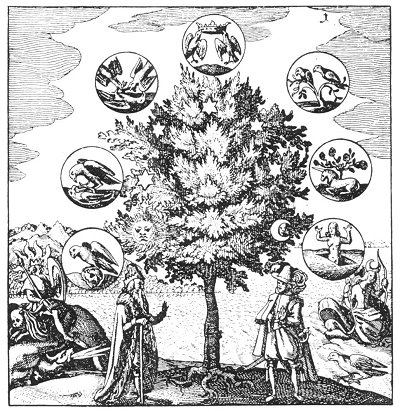
alchemy is an interesting point of relation because we have seen science pursue transmutation in the last century (mexican scientists turning tequila into diamonds, use of the cyclotron to create new elements). it is usually argued, though, that the alchemists were searching for a symbolic gold rather than actual gold... and that the "quicksilver" they refer to is not mercury but something else... but how does this relate to time? what paradigms within alchemy can relate to environmental intervals? what paradigms within alchemy demonstrates humans (or god) as independent from/having power over environment?
note - more research on alchemy is necessary.
B. in deference to the new 24 hour day, should a "new clock" be powered/measured by human processes and their intervals (i.e. the movement of currency or the movement of goods through the international supply chain, agriculture, economic fluctuations, war (or peace), number of births and deaths, etc.)
should a "new clock" attempt to entirely define itself by human produced intervals or merge human intervals with environmental intervals? is it even possible to extricate human intervals from environmental ones? do the environmental that we currently use to measure time respond to or change based on the unperceived human intervals that we impose upon them?
C. the use of the clock:
how is a clock used to promote hierarchies or authorities? how much of this authority assumes itself to be natural according to its relationship with clocks and time? are any of these hierarchies worth preserving?
what do clocks reveal to us about our habits? why are clocks used to gauge efficiency? how is the measurement of time incompatible with the actual movement of time? is थेप्रोसेस ऑफ़ मेअसुरिंग टाइम त्रुल्य देतेर्मिनिस्टिक?
how does an analog clock or a sundial differently reflect time than a digital clock?
a sundial and a digital clock reflect the energy used to power them. an analog clock appears to be a hybrid of these two... how does the reliance on analog clocks affect our understanding of time in a period between environmental measures of time and digital/electrical measures of time?
what are some alternative energy sources/mechanical models for clocks? (i.e. crystal sync, water, computers, etc.) and how do the effect the design of the machine?
an analog clock draws a picture that defines time based on what is visible in the world around us (namely the sun). a digital clock conceals this relationship, though it still nominally abides by the same interval. does the shift to using digital clocks indicate that we are less constrained by sunlight? how does the electric light play into this process?
4. what is the goal of redesigning a clock?
- to reflect our relationship with the natural world differently?
- to reflect that our movements and patterns have become or can become independent of the movements of energy outside of us? (or perhaps our perception of this)
- to observe our adherence to other intervals/energies/movements outside of the standard accepted ones?
- to reveal the relationship between time and hegemony?
- to consciously influence the design of our measurement of time?
5. other clock variations:
http://en.wikipedia.org/wiki/Prague_Astronomical_Clock
http://en.wikipedia.org/wiki/Clock_of_the_long_now


A thought about a performance art piece (don't judge me, or rip me a new one):
ReplyDeleteA human sundial with four people (12, 3, 6, 9) or all of the times, or at odds or evens
Each person holds or is their respective time area
-an armful of digitals
-a grandfather clock
-someone Riddler-esque dressed to the 9s (forgive the pun)
-fake clocks that resemble time telling
-a person continually shouting their medieval moment
-another sundial
-doing something that would happen at that time 5pm rush hour, 3am insomnia pacing
it could work, we could do something. or you could ignore this
by the way. it's 10:15.
ReplyDelete